Heating & Furnace
Repair or Replace Your Furnace? A Straight Answer for Wichita Homeowners
Whether to repair or replace your furnace comes down to what a technician finds — its safety, its condition and its repair history — and to how long you plan to stay in the house, far more than to the year printed on the data plate.
- Published
- Reading time
- 12 min read
- Category
- Heating & Furnace
20+
Years Experience
All Makes
& Models
Licensed
BUS2025-11907
5.0
on GoogleResidential
& Commercial
Most people do not get to choose when they decide whether to repair or replace their furnace. The question arrives on a cold night in late autumn — a furnace that will not light, a house that will not warm up, or a technician in the hallway explaining that a part has failed and the furnace is twenty years old.
If you have owned your home in Wichita, Haysville, Derby or Mulvane for a long time, that furnace may well be the one that came with the house. You may be weighing the decision against a budget that is already spoken for, a plan to stay in the house for years yet, or a plan to sell before long. Those are all fair things to weigh. A deadline somebody else has set is not one of them.
This guide is for homeowners across Wichita and South Central Kansas with an older furnace and a decision coming: what age does and does not tell you, what a technician should measure, and the findings that genuinely point to replacement.
Why the furnace question arrives in a Kansas autumn
A furnace in South Central Kansas sits idle from spring until October and is then asked to do its hardest work all at once. The first cold nights here tend to come in a run, and a furnace that limped through last March gets no gentle reintroduction. That is when a marginal part gives up, and it is when most of the repair-or-replace conversations we have each year begin.
The timing matters too. Choosing a new furnace, its size and its installer deserves more thought than a cold evening allows, and one of the most useful things a sound repair can do is buy the time to make that decision properly, if there turns out to be one to make.
What age does and does not tell you about a furnace
The figure most often quoted for a gas furnace is somewhere around fifteen to twenty years, and plenty of guidance suggests starting to think about replacement once one is past fifteen. That is a fair description of the odds across a great many furnaces. It is not an expiry date for yours.
Age raises the odds that the next repair comes sooner. It does not, on its own, tell you that a furnace is unsafe or finished. We work on furnaces around Wichita that are well past that range and still running properly and safely, and on younger ones that have had a hard life. How it was installed, how it has been looked after and how hard it has worked all count for more than the date.
The short version
Age changes the odds. The furnace in front of the technician decides it, not the calendar.
What you can notice and write down before anyone visits
You do not need to take a panel off to be useful here. What you have seen and heard over the last season or two shapes where a technician looks first, and it is easy to forget by the time somebody is standing in the utility room with you.
One thing is worth doing whichever way the furnace decision goes: if the house has a gas furnace and no working carbon monoxide alarm, fit one on each level and outside the bedrooms.
Worth writing down for the visit
Note what you have seen, and roughly when it started:
- The furnace runs longer than it used to, or the house no longer reaches the temperature you set.
- Rooms that used to be comfortable no longer are — and which ones.
- The burner lights and shuts off in short bursts instead of settling into a steady run.
- A new noise — a bang as it lights, a squeal, a rattle or a hum — and when in the cycle it happens.
- A smell other than the brief dusty smell of the first run of the season.
- Soot, scorch marks or rust on or around the furnace cabinet or the flue pipe.
- Water on the floor around or under the furnace.
- The gas bill against the same month last winter, if it has climbed without the weather explaining it.
- Every repair in the last few years: what was done, roughly when, and by whom, if you still have the paperwork.
Every one of those has more than one possible explanation, and which one applies is measured, not guessed. Tell us what you noticed when you call.
If you smell gas, leave the house and call the gas utility or 911 from outside. If a carbon monoxide alarm sounds, get everybody out first. Neither is a repair-or-replace question.
What a technician should measure before recommending either
A recommendation to repair or replace your furnace should rest on readings, not on a look at the cabinet and a glance at the date. On an older furnace the visit has two jobs: find what failed, and tell you honestly what condition the rest of it is in, because that is what the decision actually turns on.
On our visits, that means working through:
- Combustion and carbon monoxide, measured with an analyser rather than judged by the colour of the flame.
- The heat exchanger, inspected for any sign that combustion gases could reach the air the blower moves through the house.
- Draft and venting — that the flue carries combustion gases out of the house the way it was designed to.
- Gas pressure, read and compared with the data plate.
- Temperature rise across the furnace and static pressure in the ductwork, both against the range the manufacturer specifies.
- The ignitor, the flame sensor, the inducer and the blower motor, and what they draw against what they should.
- Every safety control — the limits, the pressure switch and the rollout switches — tested rather than assumed.
- Whether parts for this model are still made, and whether the air conditioner’s coil on the furnace has a bearing on the decision.
You should be told what was found, what it means and what each way forward involves before any work starts. If nobody can tell you which reading led to the recommendation, ask.
When repairing an older furnace is the right call
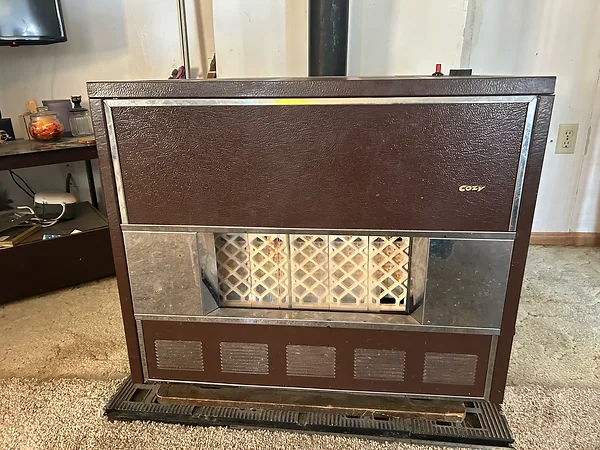
More often than people expect. A furnace is a fairly simple machine with a handful of parts that wear, and replacing one of them in a furnace that is otherwise sound is a repair, not a warning. Older furnaces are often simpler than the ones that replaced them, and plenty of their parts are still on the shelf.
Repair usually makes sense when:
- One component has failed and the rest of the furnace measures the way it should.
- Combustion, venting and the heat exchanger all check out.
- It has not needed a string of unrelated repairs over the last few winters.
- Parts for it are readily available.
- You would rather plan a replacement for a year of your choosing than make the decision this month.
When replacing the furnace genuinely earns its keep
And then there are the findings that change the recommendation. Saying so plainly is the useful answer, and you should be shown the evidence for any of these rather than simply told.
A safety finding that cannot sensibly be put right
If combustion gases can reach the air in the house, or the furnace cannot be made to burn and vent safely, it should not run until that is resolved. On some furnaces the fix is a part. On others, particularly where the heat exchanger is involved, the repair is large enough that replacement is the more sensible way to spend the money. Either way, ask to see what was found — a photograph, a reading or a look for yourself is a reasonable request, and a good technician will expect it.
The same furnace, failing in different places
One failed part is a repair. An ignitor one winter, a blower motor the next and a control board the one after that is a pattern, and the useful question changes from "what broke" to "what will it cost to keep this furnace going for as long as I need it".
A house that has changed around the furnace
A furnace is sized for the house as it was when it went in. An addition, new windows, insulation in the attic or a finished basement can leave it too large or too small for the house it heats now, and that kind of mismatch survives every repair. The same goes for the air conditioning: the cooling coil on many furnaces belongs to the air conditioner, and replacing one side sometimes settles the question for the other.
Parts that are no longer made
Most older furnaces can still be repaired with parts that are easy to get. Now and then a control or motor for a particular model is no longer made, and the choice becomes a substitute part or a new furnace. You should be told which before you agree to a repair that depends on it.
Planning a furnace replacement if you are staying in the house
How long you plan to stay is the part of the decision only you can answer, and it matters more than most guides admit. If you expect to be in the house another ten or fifteen years, a new furnace is something you will live with for most of its working life. Planning it for a mild week rather than a cold night lets you choose without anybody rushing you, and budget for it rather than find room for it.
If you expect to sell in the next year or two, the arithmetic is different. A sound repair keeps the house warm, and a buyer’s inspection will look at the furnace whatever you decide. Either way, keep a written account of what was found and what was done.
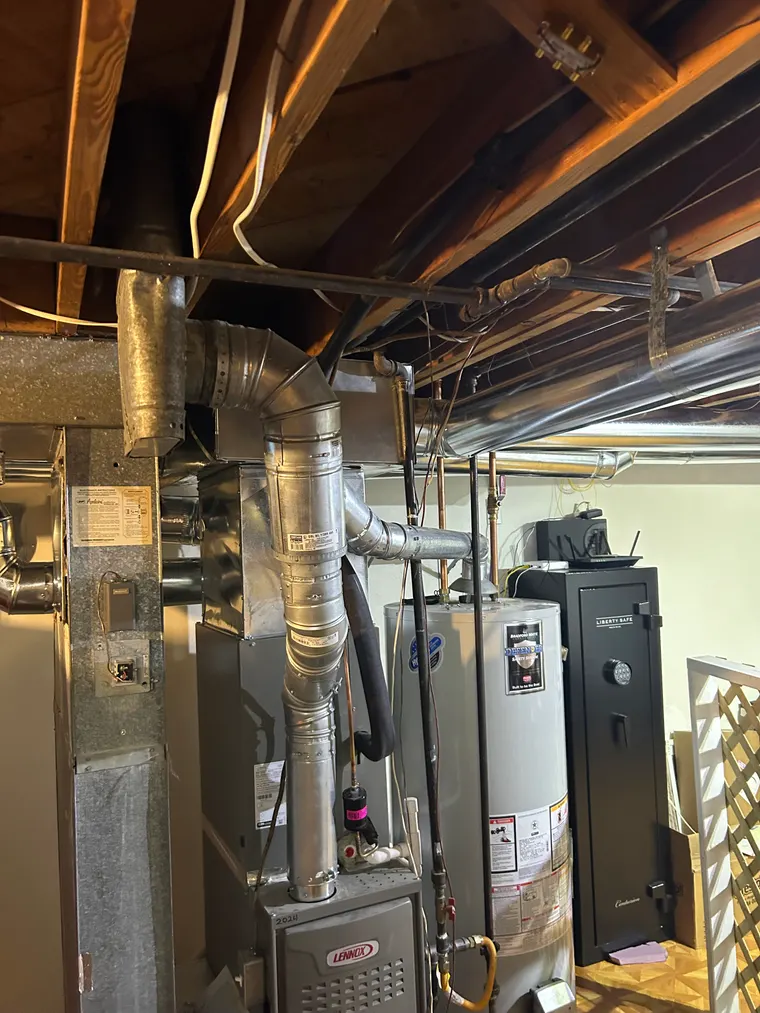
If you do replace it, the furnace is only half the job. The plenum, the return, the gas line and the flue should be fitted to the new furnace rather than reconnected as found, and the furnace sized to the house as it is now. Every new system we install includes complimentary manufacturer warranty registration.
Questions worth asking before you agree to anything
You do not need to know how a furnace works to hold a contractor to a standard. You need to know what to ask, and a contractor worth hiring will answer all of it without being pushed.
- What did you measure, and which readings are outside where they should be?
- Is the furnace safe to run as it is today?
- What does the repair involve, and what do you expect from the rest of the furnace if I keep it?
- If you are recommending replacement, what specifically led you there — and can I see it?
- Is the new furnace sized to this house, and what about the ductwork, venting and gas line is changing?
- Can I have that in writing, and take a few days to think it over?
If you are helping a parent with this decision, the same questions apply, and it is entirely reasonable to be on the phone or in the room when the answers are given. Nobody should have to decide about a furnace on the doorstep.
Common questions
- How long does a furnace last in Kansas?
- The range most often quoted for a gas furnace is about fifteen to twenty years, and a South Central Kansas winter is a fair test of one. But that is an average across a great many furnaces. How well yours was installed, how it has been looked after and how hard it has had to work matter more than the number, and we see furnaces well past that range still running properly and safely.
- Is it worth repairing a 20-year-old furnace?
- Often, yes. If one part has failed and the furnace is safe and otherwise measures well, a repair is usually the better use of the money, and it gives you time to plan a replacement on your own schedule. If the repair is a large one, the furnace has a run of recent failures behind it, or there is a safety finding, the answer may change — and you should be told which of those applies, and why.
- What does it mean if my furnace has been red-tagged?
- It means whoever inspected it — a gas utility technician or a heating contractor — found a condition they consider unsafe and shut the furnace off. Do not relight it or remove the tag. Ask what was found, ask for it in writing, and have it looked at by somebody who can tell you whether it can be put right. A red tag is a safety finding, not automatically a replacement.
- Should I replace my furnace and air conditioner at the same time?
- Not automatically. The furnace’s blower moves the air for both, and on many systems the air conditioner’s coil sits on the furnace, so the two do have to work together. Sometimes that means replacing one settles the question for the other, and often it does not. You should be told which situation you are in, and why, before you agree to either.
- Is it reasonable to get a second opinion on a furnace replacement?
- Yes, and for a decision this size it is sensible. Ask the first contractor what they measured and what led to the recommendation, get it in writing, and let the second one look at the furnace for themselves. Unless the furnace has been shut off for safety, a furnace that is still running gives you the time to do that.
- I am helping a parent decide about their furnace. What should I ask?
- The same questions anybody should: what was measured, whether the furnace is safe to run today, what the repair involves, and what specifically points to replacement if that is the recommendation. Ask for it in writing so you can read it through together, and be on the call or in the room if you can. We are glad to talk it through with both of you.
Side by side
Repair It, Repair and Plan, or Replace It?
With an older furnace there are usually three ways forward rather than two. This is how they compare.
| Compared on | Repair itFix what failed and carry on. | Repair and planFix it now, and plan the replacement for a year of your choosing. | Replace itA new furnace, sized and connected to the house as it is now. |
|---|---|---|---|
| When it fits | Repair itOne part has failed and the rest of the furnace measures well. | Repair and planThe furnace is safe and repairable, but its condition says the bigger decision is coming. | Replace itA safety finding that cannot sensibly be put right, or failures that keep repeating. |
| What you are paying for now | Repair itThe repair, and nothing else. | Repair and planThe repair, with the replacement budgeted for rather than sprung on you. | Replace itA new furnace and the connections fitted to it. |
| What you are relying on | Repair itThe rest of the furnace staying sound. | Repair and planAn honest account of what to expect from the furnace if you keep it. | Replace itThe installation being done properly — sizing, venting, gas line and airflow, not just the cabinet. |
| What to ask for | Repair itThe readings that show the rest of it is sound. | Repair and planA written note of its condition, so the plan rests on something. | Replace itThe evidence behind the recommendation, and what about the installation is changing. |
| Where it can go wrong | Repair itA string of repairs that each made sense on its own and added up to more than anybody expected. | Repair and planPutting the plan off until the furnace makes the decision for you. | Replace itA new cabinet connected to the same old problems, such as ductwork that never suited the house. |
None of the three is right for every furnace. The right one is the one the readings support and that suits how long you plan to be in the house.
How we do it
The Straight Shot on Your Furnace, Before Anything Is Replaced
Furnace replacement is a real expense, and it is the easiest place in this trade for a homeowner to get pushed. We will not do that. If you have an older furnace anywhere in Wichita and South Central Kansas and a decision coming, you will get a clear account of what failed, whether it can be repaired, what the repair costs against a replacement, and what we would expect from your furnace if you keep it.
More than twenty years installing and repairing heating and cooling on all makes and models, owner-led and based in Haysville. We’re a Rheem Pro-Partner and a dealer for Goodman, Amana, and Innovair, so when replacement is the right answer, you will hear why before you hear a model number.
If your furnace has years left, we’ll say so. Call 316-807-1713 before you decide.
Where this goes next
What We Do About It
- Furnace HeatingFurnace repair, maintenance and replacement on all makes and models, and what each visit covers.
- Furnace Checks Before WinterWhat you can safely check yourself before the heating season, and what belongs to a technician.
- AC Repair or ReplaceThe same decision on the cooling side, often for equipment the same age as the furnace beside it.
- Heating in HaysvilleOur home town: a post-war core with newer building around it, and furnaces of every age in between.
- Contact UsTell us how old the furnace is, what it is doing, and what you have been told so far.
More reading
Other Articles
- Commercial Boiler Start-UpWhat a proper boiler start-up covers for a Wichita-area church, school, office or apartment building, what to look at in the boiler room first, and how it differs from the state inspection.
- Make-Up Air in WinterWhy a kitchen or a shop goes cold and drafty when the exhaust runs in January, what a heated make-up air unit is doing about it, and what to look at before the first hard freeze.
- Radiant Floor HeatingWhat in-floor heat does well in a Kansas shop, barn or house, where it is the wrong answer, and the handful of decisions that have to be made before the concrete arrives.
Google Reviews
5.0 Stars on Google
Our customers talk about the same things: we show up fast, we find what’s actually wrong, and we finish when we said we would.
Get started
Let's Get Your Comfort Back
Tell us what your system is doing and we'll tell you what it needs.
Or just call
316-807-1713- Monday–Friday
- 7:00 a.m.–6:00 p.m.
- Saturday
- By appointment only
- Sunday
- Closed
Arrow Heating and Air Conditioning, LLC · License# BUS2025-11907