
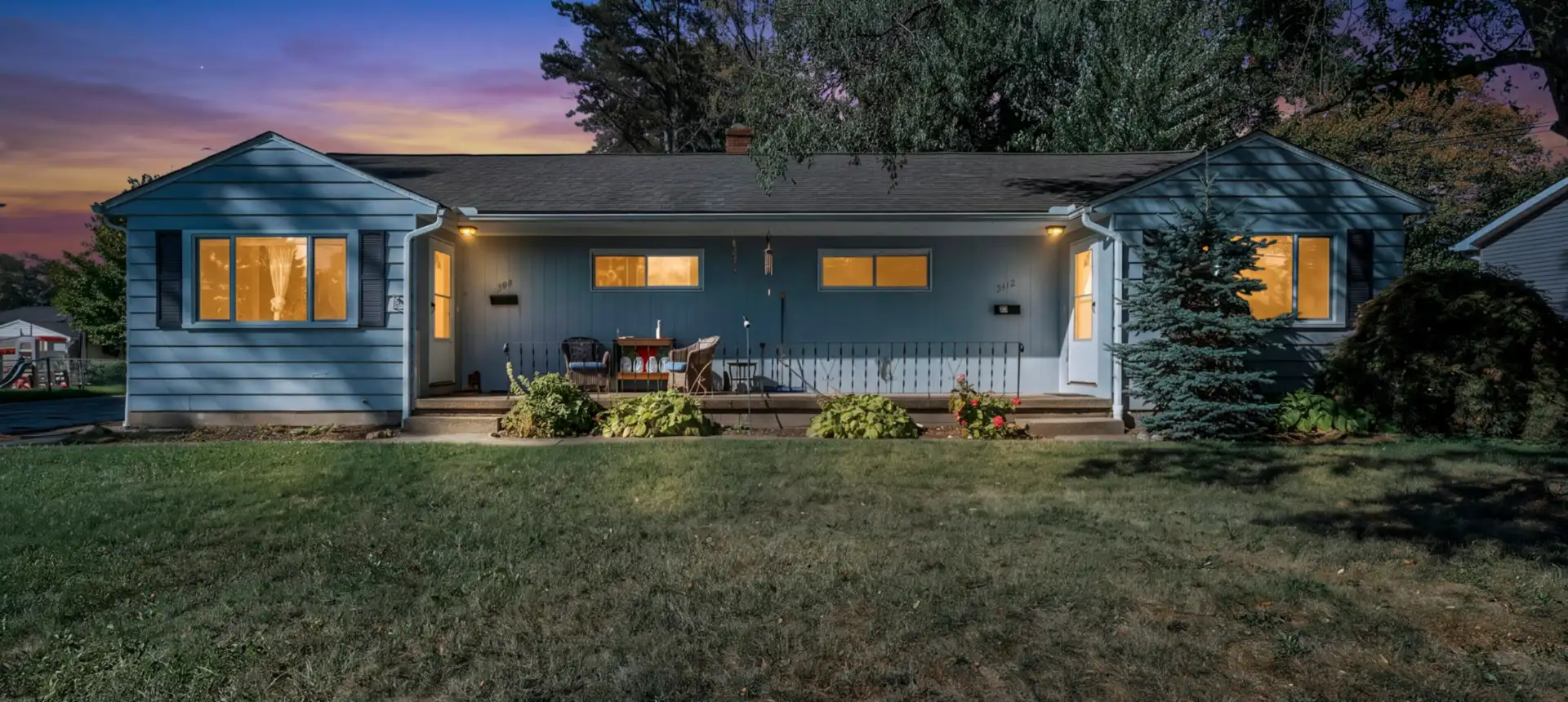
Rental Properties
Rental Property HVAC in Wichita: A Landlord’s Guide to the Heating Season
If you own rentals in Wichita, Kansas law makes the heating equipment you supply yours to keep in good and safe working order, so the cheapest winter is the one where you look at every furnace between tenants and before the cold, not after a tenant calls.
- Published
- Reading time
- 12 min read
- Category
- Rental Properties
20+
Years Experience
All Makes
& Models
Licensed
BUS2025-11907
5.0
on GoogleResidential
& Commercial
If you own a rental or two in Wichita, the first cold night of the year tends to arrive as a phone call. A tenant says the house is cold, and you are the one who has to work out what happens next. Rental property HVAC is a different job from looking after the system in your own home. You do not live with it, you hear about problems late, and the furnace is an appliance and an obligation at the same time.
This guide is for owners who run their rentals themselves or with a small property manager: a duplex in Wichita, a house kept after a move, a ranch house in Haysville or Derby bought to rent. It is written from the side of the work we see, which is the equipment, rather than from the side of a property manager or a lawyer.
It covers what Kansas law expects of a landlord on heat, what to check while a unit is between tenants, how to keep a vacant house warm through a Kansas winter, what to agree with tenants, and how to weigh repair against replacement when you are not the one paying the gas bill.
Why rental property HVAC needs a different approach
In your own house you notice when the furnace runs longer than it used to, when one room is colder than the rest, or when a new noise starts. In a rental, nobody may notice, or a tenant may notice and say nothing until the house will not heat at all. Small problems have longer to become large ones, and they are most likely to surface when the system is working hardest: the coldest night or the hottest weekend of the year.
You also inherit whatever the last owner or installer left. On rental houses we have found equipment that was never set up for the house it went into, such as blower settings that were never set correctly at installation. A tenant has no way of knowing that, and neither do you until somebody looks.
None of that means a rental needs more equipment or more expensive equipment. It means the equipment needs looking at on your schedule rather than the tenant’s, and records that let you plan instead of react.
What Kansas law expects of a landlord on heat
The Kansas Residential Landlord and Tenant Act sets out a landlord’s duties in K.S.A. 58-2553. Among them, a landlord must maintain the heating, ventilating and air-conditioning appliances they supply in good and safe working order and condition. The same section requires a landlord to supply reasonable heat, with an exception for heat generated by an installation within the tenant’s exclusive control and supplied by a direct utility connection. Whether that exception fits your building is a question for your lease and, if it matters, a lawyer. If you supplied the furnace, keeping it working is your job either way.
If a problem materially affects health and safety, a tenant can give you written notice of it. Under K.S.A. 58-2559, if you do not begin a good-faith effort to remedy it within fourteen days of receiving that notice, the tenant can end the lease on at least thirty days’ notice, and can also seek damages.
Access is covered too. K.S.A. 58-2557 lets a landlord enter to make necessary repairs at reasonable hours and after reasonable notice to the tenant, and without consent only in an extreme hazard involving the potential loss of life or severe property damage.
That is an HVAC contractor’s summary, not legal advice. The Act is short and worth reading, and your lease, your insurer or your lawyer may ask more of you than it does.
The short version
If you supplied the furnace, Kansas law makes keeping it in good and safe working order your job, whoever pays the gas bill.
Fourteen days is a legal floor, not a repair schedule. Nobody without heat in January measures the wait in fortnights, and good tenants remember how long it took.
Between tenants: the best time to look at the equipment
A vacant unit is the one time you have the equipment to yourself. There is no notice to give, no schedule to work around, no furniture against the furnace closet and no tenant waiting in a cold house. Turnover is when a problem costs least to find, and it is when you can see what the last tenant did or did not do.
Some of that you can check on the walk-through. The rest belongs to a technician, because the things that matter most on a furnace, such as combustion, venting, the safeties and the airflow, are measured rather than seen.
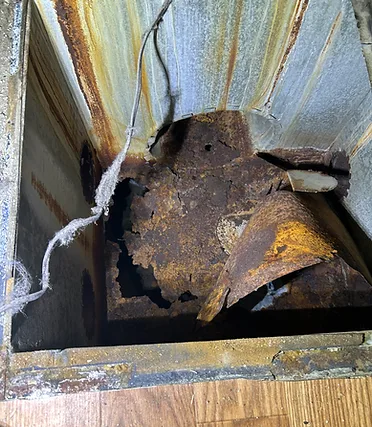
On the turnover walk-through
Note what you can see:
- The filter: its size, which is printed on the frame, and how it looks. Write the size down for that address.
- Whether the furnace closet or utility room has been used for storage, and anything stacked against the equipment.
- Return grilles covered by furniture, rugs or boxes, and supply registers that have been closed.
- The thermostat: whether the screen works, whether it is the one you installed, and whether it needs batteries.
- Carbon monoxide alarms: whether they are there, whether they sound when tested, and the replace-by date on the back.
- Water, rust or staining on the floor around the furnace or the indoor coil.
- Leaves, grass and debris against the outdoor unit, and whether it still sits level.
- The data plates on the furnace and the outdoor unit. A phone photo of each records the model, the serial number and, usually, the age.
Anything on that list that looks wrong goes to the technician as an observation. What it means is theirs to find.
Keeping a vacant rental warm through a Kansas winter
An empty house still needs heat. Pipes in an unheated house can freeze in a hard Kansas cold snap, and a burst pipe in a vacant unit can run for days before anybody finds it. Turning the furnace off to save gas between tenants is a poor trade against the cost of water damage.
Leave the heat on, set low rather than off, and read what your insurance policy says about vacant properties, because some policies set conditions for them.
Then make sure the house can tell you when something changes. A furnace that stops in an empty house does not make a phone call, but a thermostat that reports to your phone can. Many connected thermostats show the indoor temperature remotely and can send an alert when it moves outside a range you set. Whether one will work with the equipment in a particular house is worth checking before you buy it.
If the gas or electricity has been off and the furnace needs relighting or restarting, that is a job for a technician or the gas utility, not for whoever is painting the bedrooms.
What to agree with tenants, and what to ask them to report
The lease is where expectations about the equipment belong. Many landlords put filter changes on the tenant. If you do, say which size, who buys them and when they are changed, or supply them yourself and check them at every visit. The filter is the one part of the system a tenant handles routinely, so it is worth being specific about.
Ask tenants to keep the furnace closet clear and the return grilles uncovered, and to leave the equipment panels alone. In smaller and older houses the furnace often sits in a hall closet, and a closet is where storage ends up.
Most of all, ask them to tell you early. Give them one number to call, yours or your property manager’s, and decide in advance what happens next: who calls the contractor, and how much can be spent without asking you first.
Worth asking tenants to report as soon as they notice it:
- The house not reaching the temperature set on the thermostat, or air from the registers that feels cool while the heat is running.
- A new noise from the furnace or the outdoor unit, or a familiar one that has changed.
- Water on the floor around the furnace or the indoor unit.
- A thermostat with a blank screen, or one that does not respond.
- Ice that builds up and stays on the outdoor unit, if the house has a heat pump.
- A smell from the registers or the furnace closet that was not there before.
Gas smells, alarms and urgent calls
A carbon monoxide alarm that sounds, or a smell of gas, is different. Tenants should leave the house first, call 911 or the gas utility from outside, and then call you.
Our own policy is worth knowing here. Emergency calls are for current customers only. If you own rentals, it is worth having the equipment at each address looked at before the first cold night, so that you already are one.
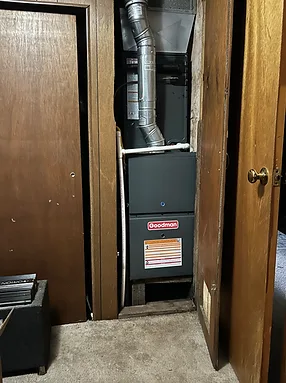
Repair or replace when the house is a rental
The repair-or-replace question on a rental has the same floor as in your own home: a finding that makes a furnace unsafe is not something to weigh against how long you plan to hold the property. Above that floor, the sums work differently.
How long you expect to own the house matters more than the age on the data plate. A sound older furnace that has been looked after can be well worth repairing if you plan to sell in a few years, and we are glad to keep older equipment running where it is safe and sensible to do so. If you plan to hold the house for a long time, a replacement planned during a vacancy is far easier on everyone than one forced in January with a tenant waiting.
Count the costs that never appear on an invoice: a tenant without heat, a vacancy that runs longer because the unit is not ready, and the good tenant who does not renew after a second winter of breakdowns.
Efficiency when the tenant pays the bills
When the tenant pays the gas and electric, a more efficient system saves them money rather than you. That does not make efficiency irrelevant: lower bills make a unit easier to let and a tenant likelier to stay, and comfortable rooms produce fewer calls. It does mean the right system for a rental is often the dependable, correctly sized one rather than the top of a range, and a contractor should be able to explain the difference in terms of your property rather than a brochure.
Matching equipment across your rentals
If you own several similar houses, there is a case for keeping their equipment similar too: the same filter sizes, familiar parts, and one set of quirks to learn. It is not a reason to replace a sound system early, but it is worth weighing when one comes due.
Working with one HVAC contractor across several rentals
Owners with more than one address get the most from one contractor who knows every system they own. The history stays in one place, the technician arrives knowing what is there, and the findings come back in a form you can compare from one property to the next.
What you should expect from that is simple to state. You hear what is wrong at each address and what the repair will cost before any work starts, and you decide. You choose whether visits are arranged through you or directly with the tenant, with the notice your lease and Kansas law require. When new equipment goes in, the manufacturer warranty should be registered for you. That matters more on a rental than anywhere, because a warranty nobody registered is easy to lose track of across several properties and several changes of tenant.
We work on all makes and models, residential and commercial, across Wichita and South Central Kansas, from our base in Haysville. One house or a dozen, the approach is the same.
Worth keeping on file for each address:
- The make, model, serial number and approximate age of the furnace and of the air conditioner or heat pump.
- The filter size, and where the filter goes.
- Each service visit: the date, what was found, what was done and what was recommended.
- Warranty registration details for anything installed new.
- The thermostat model, and whether it can be read remotely.
- Dated photos of the equipment and its data plates.
Questions worth asking any contractor who works on your rentals
Whoever you hire, these are fair questions, and a contractor used to working with landlords will answer them without being pushed.
- Will you tell me what you found and what it costs before you start any work?
- Can I have written findings for each address, with photos?
- Will you arrange access with my tenant directly, or only through me?
- If you recommend replacing something, what would a repair cost instead, and what would it buy me?
- Do you register the manufacturer warranty on new equipment, and in whose name?
- Do you work on every make and model I own, or only the brands you sell?
Rental property HVAC rewards the owner who looks before the tenant calls. A furnace seen on your schedule is a line in a budget. The same furnace found on a January night is a crisis with a tenant attached.
Common questions
- Is a landlord required to provide heat in Kansas?
- Kansas law, in K.S.A. 58-2553, requires a landlord to keep the heating, ventilating and air-conditioning appliances they supply in good and safe working order, and to supply reasonable heat unless the heat comes from an installation in the tenant’s exclusive control on a direct utility connection. In practice, if you supplied the furnace, keeping it working is your job. This is a contractor’s summary rather than legal advice.
- How long does a landlord have to fix the heat in Kansas?
- The Kansas Residential Landlord and Tenant Act does not set a deadline in hours. If a problem materially affects health and safety and the tenant gives written notice, K.S.A. 58-2559 gives the landlord fourteen days to begin a good-faith effort to remedy it before the tenant may end the lease. That is a legal floor rather than a reasonable wait for a house with no heat, and your lease or local code may ask more of you.
- Who should change the furnace filter in a rental, the landlord or the tenant?
- Whoever the lease says. Many landlords put filter changes on the tenant, and that works best when the lease names the size and who buys them. Either way, check the filter at every turnover and every service visit. It is the part of the system a tenant is likeliest to forget, and one of the first things a technician looks at.
- Should I leave the heat on in a vacant rental over the winter?
- Yes. Set it low rather than turning it off, because frozen pipes in an empty house can do damage that goes unnoticed for days. Check what your insurance policy requires of a vacant property, and have someone check on the house, or use a thermostat that reports the indoor temperature to your phone.
- Do tenants need to be home for HVAC service?
- Not necessarily. Kansas law lets a landlord enter to make necessary repairs at reasonable hours and after reasonable notice to the tenant. Many tenants prefer to be there, and some leases set out how access works. Tell us how you would like the visit arranged, through you or with the tenant directly, and we will set it up that way.
- Can Arrow look after the heating and cooling at several rental properties?
- Yes. We work on all makes and models across Wichita and South Central Kansas, and you get the findings and the repair cost for each address before any work starts, so you can decide property by property. Tell us how many units you have and what equipment is in them, and we will start from there.
How we do it
The Straight Shot for Landlords
A rental’s heating and cooling should be a predictable line in your budget, not a surprise that arrives with a tenant’s phone call. Whether you own one house or a dozen anywhere in Wichita and South Central Kansas, you will hear what each system needs, what it will cost and what can safely wait, before any work starts.
More than twenty years installing and repairing heating and cooling on all makes and models, owner-led and based in Haysville. We’re a Rheem Pro-Partner and a dealer for Goodman, Amana, and Innovair, and every new system we install includes complimentary manufacturer warranty registration.
One address or a dozen, you’ll know what each system needs first. Call 316-807-1713.
Where this goes next
What We Do About It
- Furnace HeatingFurnace repair, service and replacement on all makes and models, for the houses you rent as much as the one you live in.
- Home Buyer InspectionBuying another rental? An equipment inspection before you close tells you what the heating and cooling will need over the next few years.
- HVAC in WichitaHeating and cooling service across Wichita, our core market, on all makes and models in houses old and new.
- ReviewsWhat our customers, landlords among them, say about working with us, in their own words.
- Contact UsSend us the addresses, the equipment at each one if you know it, and anything a tenant has reported.
More reading
Other Articles
- HVAC for Older HomesFor owners of older Wichita-area homes: how to add cooling without cutting up the plaster, what to do with old ducts, radiators and furnaces, and what to settle first.
- Heat Pump vs FurnaceFor homeowners whose original furnace and air conditioner are coming due together: how each system handles a Kansas winter, where dual fuel fits, and what should decide it.
- Furnace Repair or ReplaceFor homeowners with an older furnace: what its age does and does not tell you, what a fair diagnosis measures, and the few findings that really do point to replacement.
Google Reviews
5.0 Stars on Google
Our customers talk about the same things: we show up fast, we find what’s actually wrong, and we finish when we said we would.
Get started
Let's Get Your Comfort Back
Tell us what your system is doing and we'll tell you what it needs.
Or just call
316-807-1713- Monday–Friday
- 7:00 a.m.–6:00 p.m.
- Saturday
- By appointment only
- Sunday
- Closed
Arrow Heating and Air Conditioning, LLC · License# BUS2025-11907