
Heat Pumps
Heat Pump vs Furnace: Which Is Right for Your Wichita Home?
For a Wichita home on natural gas the answer is often both — a heat pump that cools all summer and carries the milder part of winter, with a gas furnace for the hard cold — but your fuel, your ductwork and which equipment is actually due should decide it, not a sales pitch from either side.
- Published
- Reading time
- 14 min read
- Category
- Heat Pumps
20+
Years Experience
All Makes
& Models
Licensed
BUS2025-11907
5.0
on GoogleResidential
& Commercial
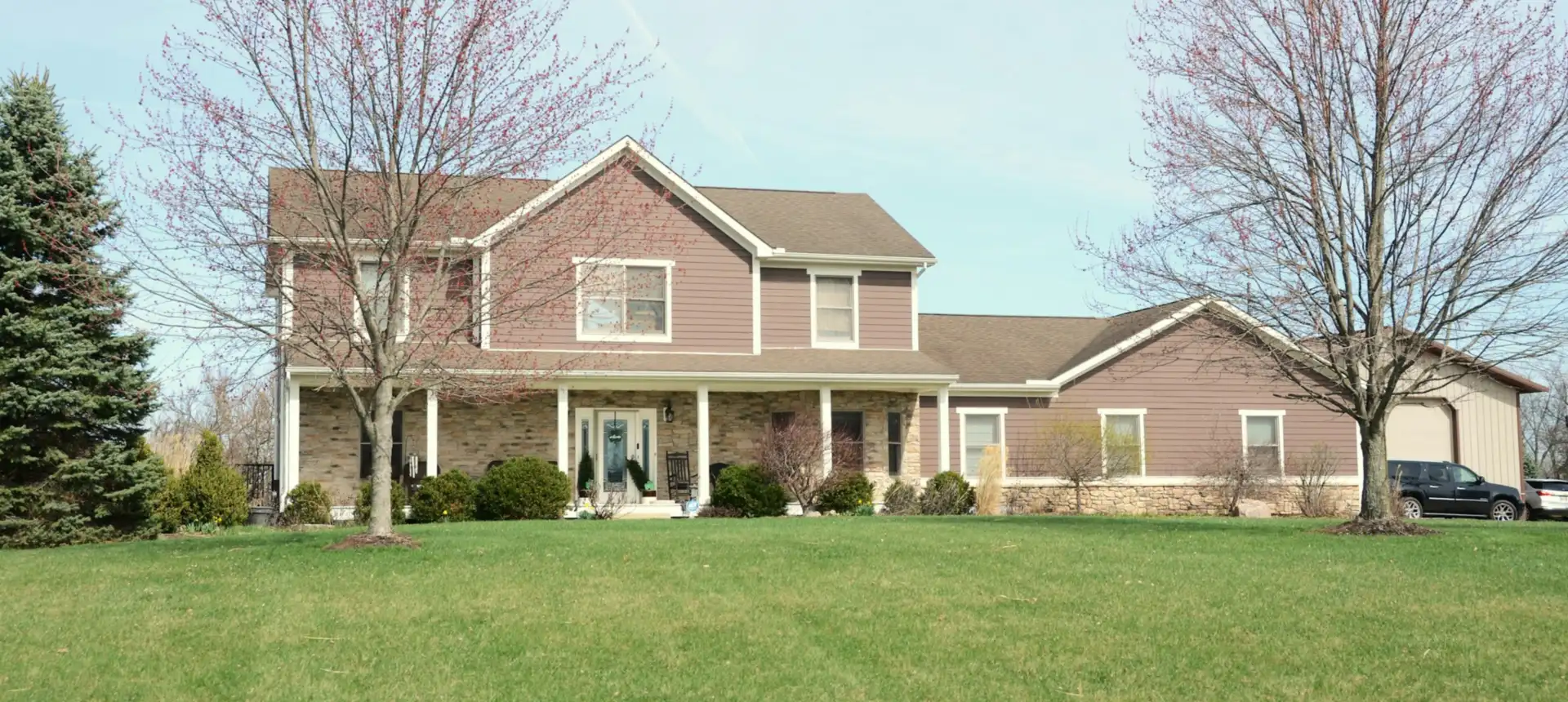
If your house went up between the mid-1990s and the early 2010s, there is a fair chance the furnace and air conditioner in it are the ones the builder put in, and that both are reaching the end of their first run. That is usually when the heat pump vs furnace question comes up — from a neighbour who switched, from a quote that included one, or from something you read.
You will hear two confident answers. One says a heat pump cannot keep a house warm through a Kansas winter. The other says every house should have one. Neither is a good place to start. Both are about heat pumps in general, and your decision is about one house in Wichita, Andover, Derby, Goddard or Maize, with its own fuel, its own ductwork and its own budget.
This guide is for homeowners across Wichita and South Central Kansas who are planning a replacement rather than reacting to a breakdown. It covers how each system makes heat, what a Kansas winter does to a heat pump, where a dual-fuel system fits, and what should decide it for your house.
Why the question arrives when the original system comes due
In a house built in the late 1990s or 2000s, the furnace and air conditioner usually went in on the same day, and they tend to come due within a few years of each other. Most families find that out during the hottest week of a Wichita summer or the first hard cold of winter, when one of them stops. That is the worst possible moment to weigh a bigger change.
If one has failed and the other is sound, a good repair is often the right first step, because it buys time to make this decision properly rather than on a cold evening. If both are near the end, you are in the best position this question ever offers: one replacement, planned, with every option open.
Heat pump vs furnace: how each one makes heat
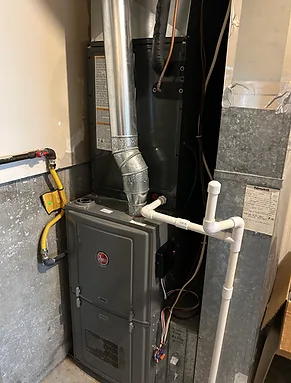
A gas furnace makes heat. It burns natural gas or propane, passes the heat through a heat exchanger into the air the blower moves, and sends that air through the ducts hot. It produces the same heat on a zero-degree night as on a mild one. In summer it does nothing but move air for the air conditioner, whose coil usually sits on top of it.
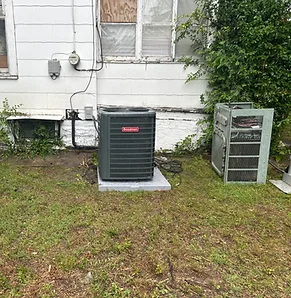
A heat pump moves heat rather than making it. Its outdoor unit is the same kind of machine as an air conditioner, with a valve that lets it run in reverse. In summer it carries heat out of the house. In winter it collects heat from the outdoor air — there is some even on a cold day — and carries it in. So a heat pump fitted in place of an air conditioner does both jobs. Because it moves heat instead of burning anything, it can deliver more heat than the electricity it uses, and that is the whole case for it.
The two feel different, too. A furnace sends hot air in short bursts. A heat pump sends warm air in longer, steadier runs, and the air at the register feels cooler to the hand even when the house is at the same temperature. Plenty of people prefer it once they are used to it, but it is worth knowing before you decide.
The short version
A heat pump is an air conditioner that can also run in reverse, so it takes the air conditioner’s place as well as heating the house.
What a Kansas winter does to a heat pump
For a Wichita house, this is the part of the comparison that matters most. There is less heat in outdoor air the colder it gets, so a heat pump’s heating output falls as the temperature falls, and the electricity it needs for each unit of heat rises. That is true of every heat pump from every manufacturer. The ratings show it: heating capacity is published at 47 degrees and again at 17, and the gap between the two numbers is the honest picture.
Wichita’s winter design temperature — the figure heating equipment is sized against — sits in the single digits, and we get stretches colder than that. At some temperature every heat pump stops being able to replace, on its own, the heat the house is losing. Cold-climate models push that point a long way down, and that has changed what is sensible here over the last decade. It has not made the point go away.
So every heat pump in this part of Kansas needs a second source of heat for the coldest days. That is either electric heat strips in the indoor unit, which are simple and dependable but expensive to run for long, or a gas furnace, which is what makes a system dual fuel.
Frost, defrost and what you will see outside
In cold, damp weather, frost forms on a heat pump’s outdoor coil, and the unit clears it by running a short defrost cycle. It pauses heating, often with a cloud of vapour rising off the unit, and then carries on. That is part of normal operation and worth knowing about before the first time you see it. Ice that builds up and stays is a different thing, and worth a call.
Where a dual-fuel system fits
A dual-fuel system, sometimes called a hybrid system, pairs a heat pump outside with a gas furnace inside. The heat pump cools the house all summer and heats it through the milder part of winter, which in South Central Kansas is a good share of it. When the outdoor temperature drops below a set point, the system switches to the furnace, which delivers full heat however cold it gets.
That switchover point is not a fixed number. It is set for your house from two things: the temperature at which the heat pump can no longer keep up, and the temperature at which burning gas becomes cheaper than running the heat pump at your rates. A contractor should be able to tell you where they set it and why.
For a house that already has gas and a furnace in decent shape, dual fuel is often the natural answer at replacement time. The heat pump takes the air conditioner’s place outside, its coil sits on the furnace where the old one did, and the furnace runs fewer hours each winter than it used to. It does need a thermostat or control that can manage both, and plenty of older wall controls cannot.
Running costs, without the sales pitch
Which system costs less to run depends on what you pay for electricity and for gas, and on the outdoor temperature, so any honest answer comes with assumptions attached. The general pattern, though, holds everywhere.
In mild weather a heat pump is at its most efficient, and depending on your rates it can heat as cheaply as natural gas or more cheaply. As the temperature falls its efficiency falls with it, and at some point burning natural gas becomes the cheaper way to make the heat. Electric heat strips cost the most of the three to run, so be careful about an all-electric heat pump that leans on them often.
Propane changes the picture. It generally costs more than natural gas for the same heat, which pushes the switchover point lower and makes a heat pump much easier to justify on a house outside the gas lines.
In summer there is nothing to compare, because a heat pump cools the way an air conditioner does. So if your air conditioner is due as well, the real question is the price difference between a heat pump and an air conditioner of the same size and line, set against what the heat pump would save you over the winters you expect to stay. Utility and manufacturer incentives come and go, so check what is current before you count one in.
If anyone quotes you a yearly saving, ask to see the rates and temperatures behind it. A number without its assumptions is a sales figure.
What to gather before anyone quotes
You do not need to know the equipment to make this decision well. A few things you can find yourself will shape the recommendation, and having them to hand means the visit is spent on the house rather than on questions.
Worth having to hand
Find or note what you can:
- Whether the house has natural gas, propane, or no gas service at all.
- The age of the furnace and of the air conditioner. The data plates or the original paperwork usually say.
- Which of the two has been giving trouble, and what has been repaired in the last few years.
- A year of gas and electric bills, or access to them online, so winter and summer can be compared.
- Rooms that run colder in winter or warmer in summer than the rest of the house.
- The number printed on the main breaker in your electrical panel, if it is easy to see with the door open.
- Changes to the house since it was built, such as a finished basement, an addition, new windows or more insulation.
- How long you expect to stay in the house.
None of those decides it on its own. Together they tell a technician where to look first.
What a contractor should check before recommending either
A recommendation for a heat pump, a furnace or both should rest on your house, not on a brochure and not on whatever came out of the utility room. On our visits, the assessment covers what decides which system will actually work there.
That means looking at:
- How much heat the house loses on a design-temperature night, calculated for the house as it is now rather than read off the old equipment.
- What the proposed heat pump puts out at cold temperatures, not just its headline rating, measured against that heat loss.
- The ductwork — its size, its condition and the static pressure across it — because a heat pump delivers its heat as warm rather than hot air, and that takes airflow the ducts have to carry.
- The electrical service and panel, which have to carry the outdoor unit and any backup heat strips.
- If the furnace is staying, its condition, its blower and its controls, and whether they can work with a heat pump.
- The thermostat wiring, and whether the control on the wall can run the system being proposed.
- Where the outdoor unit will sit: level, clear of a roof edge that drips onto it, and up out of drifting snow.
You should be told what was found and what each option involves before any work starts. If one option needs ductwork or electrical work, that belongs in the quote, not in a surprise on installation day.
When a furnace on its own is still the better answer
A heat pump is not the right call for every house, and saying so is part of the job. There are good reasons to keep things simple.
A gas furnace and air conditioner usually still make more sense when:
- Only the furnace has failed, and the air conditioner is young and working well.
- The ductwork could not carry a heat pump without changes that cost more than it would save.
- The electrical service would need an upgrade that is hard to justify for the house.
- You expect to sell within a year or two, and a straightforward replacement suits that plan.
- The house is comfortable, the bills are reasonable, and nothing is actually due yet.
And when a heat pump is worth a serious look
When the air conditioner is due anyway, because the heat pump replaces it and the extra cost is only the difference between the two. When the house is on propane or has no gas service. When the furnace is sound and could become the backup half of a dual-fuel system. And when you would rather burn less fuel in the house, and the numbers for your house support it.
Questions worth asking before you agree to anything
Whichever way you lean, these are fair questions for anybody quoting the work, and a contractor worth hiring will answer all of them without being pushed.
- Did you calculate the heat loss for this house, or size the new system from the old one?
- What does this heat pump put out at 17 degrees, and at our design temperature?
- What heats the house below that — heat strips or the furnace — and at what outdoor temperature does it switch?
- What rates and temperatures sit behind any saving you are quoting me?
- Do the ductwork, the electrical panel or the thermostat need changes, and are they in this price?
- Can I have that in writing, and take a few days to think it over?
A heat pump vs furnace decision is one you will live with for a long time. It deserves an evening with the numbers in front of you, not a few minutes on the doorstep.
Common questions
- Do heat pumps work in a Wichita winter?
- Yes, with a qualification that matters. A heat pump’s output falls as the outdoor temperature falls, so on the coldest days every heat pump here needs help, either from electric heat strips or from a gas furnace in a dual-fuel system. Cold-climate models keep working well into genuinely cold weather, and a properly sized one carries a Wichita house through much of the winter. Whether it works in your house is settled by sizing it against the heat your house loses, not by a brochure.
- Is a heat pump cheaper to run than a gas furnace in Kansas?
- It depends on your electric and gas rates and on the weather. In mild weather a heat pump can heat as cheaply as natural gas or more cheaply; as it gets colder, the furnace usually becomes the cheaper way to make heat. On propane, the heat pump’s advantage is larger. That is why dual-fuel systems switch between the two at a set outdoor temperature, and why any saving you are quoted should come with its assumptions.
- What is a dual-fuel heat pump system?
- A heat pump and a gas furnace working as one system. The heat pump cools the house in summer and heats it in milder winter weather; below a switchover temperature set for your house, the furnace takes over. It is a common choice where a house already has natural gas, because it uses each where it is strongest.
- Can I add a heat pump to the furnace I already have?
- Often, if the furnace is in good condition and its blower and controls can work with one. The heat pump goes outside where the air conditioner was, and its coil sits on the furnace. Whether your furnace and thermostat are compatible is something to check, not assume, before you agree to it.
- Why does the air from a heat pump feel cooler than air from a furnace?
- Because it is cooler. A heat pump delivers warm air in longer, steadier runs, where a furnace delivers hot air in short bursts, and the house can reach the same temperature either way. If the house itself is not reaching the temperature you set, that is a different matter and worth having looked at.
- Should I replace my air conditioner with a heat pump if my furnace still works?
- It is often the best moment to consider one. A heat pump in place of the air conditioner makes the furnace you already have the backup half of a dual-fuel system, and the cost to compare is the difference between a heat pump and an air conditioner of the same size, not the price of a whole new system. Your furnace’s condition and compatibility decide whether it makes sense.
Side by side
Gas Furnace, Heat Pump or Dual Fuel?
Most Wichita homes end up with one of three set-ups. This is how they compare.
| Compared on | Gas furnace and ACA furnace burns gas for heat; a separate air conditioner cools. | Heat pumpOne outdoor unit that cools in summer and heats in winter, with electric backup heat indoors. | Dual fuelA heat pump and a gas furnace on one system, each running where it is strongest. |
|---|---|---|---|
| How it heats | Gas furnace and ACBurns gas and passes the heat to the air through a heat exchanger. Hot air at the registers. | Heat pumpMoves heat from the outdoor air into the house. Warm rather than hot air, in longer runs. | Dual fuelThe heat pump through the milder part of winter, the furnace once it turns hard. |
| Summer cooling | Gas furnace and ACA separate air conditioner, with its coil on the furnace. | Heat pumpThe heat pump is the air conditioner. | Dual fuelThe heat pump cools, as in the all-electric version. |
| In a hard Kansas cold snap | Gas furnace and ACFull output however cold it gets outside. | Heat pumpOutput falls as it gets colder; electric heat strips make up the shortfall. | Dual fuelThe furnace takes over at a switchover temperature set for your house. |
| Running cost depends on | Gas furnace and ACMostly your gas rate, plus the electricity the blower uses. | Heat pumpYour electric rate, and how many hours the heat strips run. | Dual fuelYour gas and electric rates together, and where the switchover is set. |
| Fits best when | Gas furnace and ACThe house has natural gas and the air conditioner still has years left. | Heat pumpThere is no natural gas at the house, or propane you would rather burn less of. | Dual fuelThe house has gas, and the furnace is sound or both units are due together. |
| What to check first | Gas furnace and ACVenting, the gas line, and a working carbon monoxide alarm on every level. | Heat pumpIts output at cold temperatures, and whether the electrical service can carry the backup heat. | Dual fuelThe switchover setting, and a thermostat or control that can run both. |
None of the three is right for every house. The right one is the one your fuel, your ductwork and the age of your equipment support.
How we do it
The Straight Shot on Heat Pumps and Furnaces
A heat pump is not a fashion and a furnace is not a relic. Each is the right answer for some Wichita houses and the wrong one for others, and you should be told which yours is, and why. If your system is coming due anywhere in Wichita and South Central Kansas, you will get a clear account of what the house needs, what each option costs to install and to run, and which one we would choose in your position.
More than twenty years installing and repairing heating and cooling on all makes and models, owner-led and based in Haysville. We’re a Rheem Pro-Partner and a dealer for Goodman, Amana, and Innovair, and every new system we install includes complimentary manufacturer warranty registration.
Furnace, heat pump or both, you’ll hear why before you hear a model number. Call 316-807-1713.
Where this goes next
What We Do About It
- Furnace HeatingGas furnace repair and replacement on all makes and models, sized to the house rather than to whatever came out of it.
- Air ConditioningThe half of a heat pump’s year that runs all summer: AC service, repair and replacement on all brands.
- Furnace Repair or ReplaceIf the furnace may still have years in it, how to tell before you plan anything new.
- HVAC in GoddardBuilder-installed systems reaching their first replacement decision, which is the house this guide is written for.
- Contact UsTell us what fuel the house runs on, how old the furnace and AC are, and what you have been quoted so far.
More reading
Other Articles
- Furnace Repair or ReplaceFor homeowners with an older furnace: what its age does and does not tell you, what a fair diagnosis measures, and the few findings that really do point to replacement.
- Commercial Boiler Start-UpWhat a proper boiler start-up covers for a Wichita-area church, school, office or apartment building, what to look at in the boiler room first, and how it differs from the state inspection.
- Make-Up Air in WinterWhy a kitchen or a shop goes cold and drafty when the exhaust runs in January, what a heated make-up air unit is doing about it, and what to look at before the first hard freeze.
Google Reviews
5.0 Stars on Google
Our customers talk about the same things: we show up fast, we find what’s actually wrong, and we finish when we said we would.
Get started
Let's Get Your Comfort Back
Tell us what your system is doing and we'll tell you what it needs.
Or just call
316-807-1713- Monday–Friday
- 7:00 a.m.–6:00 p.m.
- Saturday
- By appointment only
- Sunday
- Closed
Arrow Heating and Air Conditioning, LLC · License# BUS2025-11907