
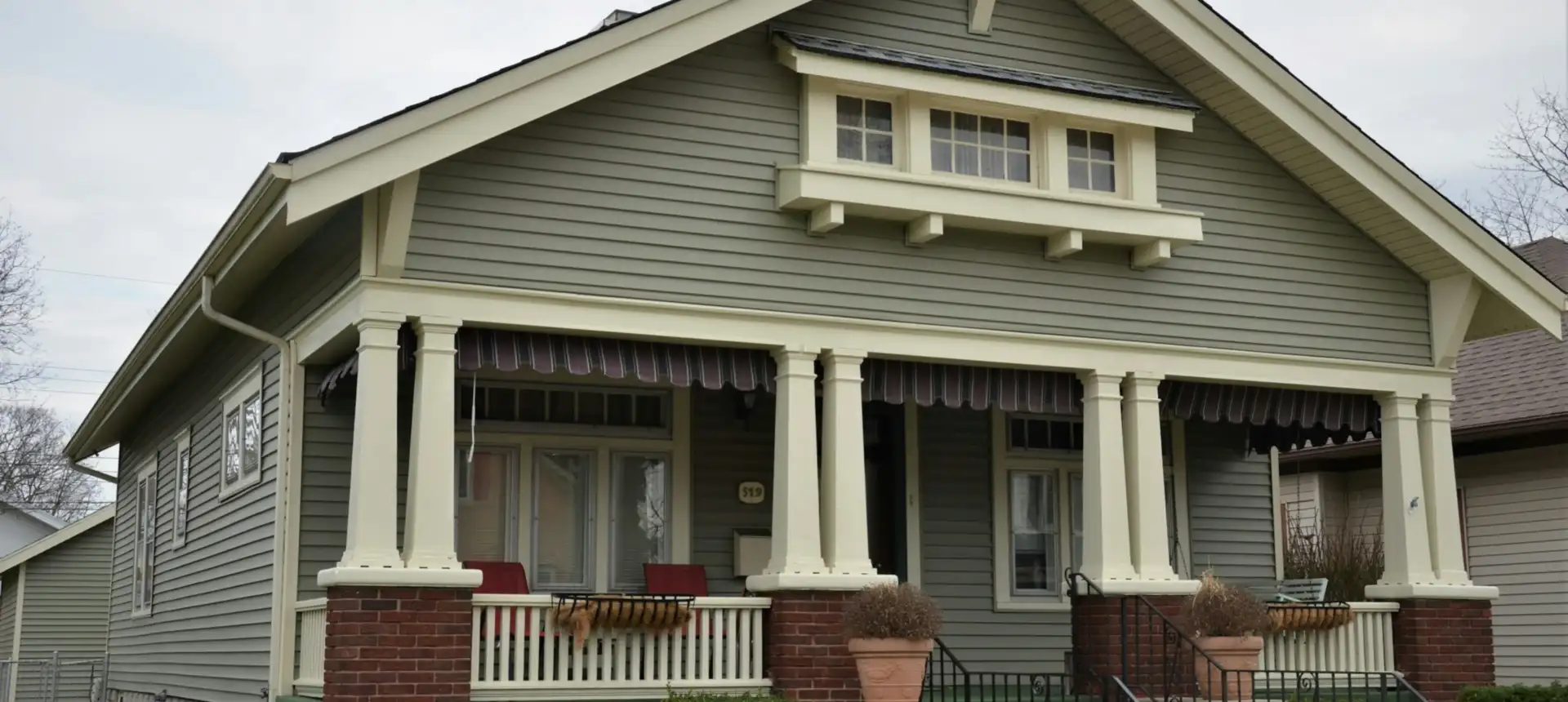
Older Homes
HVAC for Older Homes in Wichita: Fix the Comfort, Keep the Character
The right HVAC for an older Wichita home starts with how air can get around the house, not with which unit to buy: use sound ductwork where you have it, go ductless where you do not, and measure before anyone cuts into the plaster.
- Published
- Reading time
- 15 min read
- Category
- Older Homes
20+
Years Experience
All Makes
& Models
Licensed
BUS2025-11907
5.0
on GoogleResidential
& Commercial
You probably chose the house for the things a new one does not have: the woodwork, the plaster, the deep front porch. Then came the first July, with a window unit in every bedroom and an upstairs that never quite cooled off. HVAC for older homes is a different job from HVAC for a house built with ductwork in mind, because the first question is not which unit to buy. It is how conditioned air will get around a house that was never designed to move it.
Wichita has plenty of these houses. Census figures put roughly a third of the city’s homes before 1960, and in College Hill, Crown Heights, Riverside and Delano it is most of them. The older blocks of Augusta, Winfield, Mulvane and other South Central Kansas towns have the same houses and the same questions.
This guide is for owners who want the house comfortable without giving up what made them buy it, and who would rather understand the options than be sold one. It covers what to find out first, the real ways to add cooling, what to do about old ductwork and older furnaces, and what to settle before anyone picks up a saw.
Why HVAC for older homes is a different job
Most houses from before the middle of the last century were built around heat alone. Some started with a gravity furnace and large ducts that relied on warm air rising by itself. Others had a boiler feeding radiators, and smaller houses sometimes got a floor furnace or a wall heater. Cooling came later if it came at all, and it was fitted around whatever was already there.
That history shows up in three ways. Cooling moves more air than heating does, and cold air will not rise through a house on its own, so ductwork laid out for a furnace can hold an added air conditioner back. There is often no obvious route for a new duct through plaster walls and closets that were never meant to give up space. And the system has usually been changed at least once already, by someone working around the last person’s choices.
Then there is the climate. A Wichita system has to handle triple-digit afternoons in July and hard freezes in January, often through the same ductwork, and a house with original windows and uninsulated walls feels both ends of that. None of this is a reason to gut anything. It is a reason to look carefully before deciding.
The short version
In an older house, the first question is not which unit to buy. It is how conditioned air will get around.
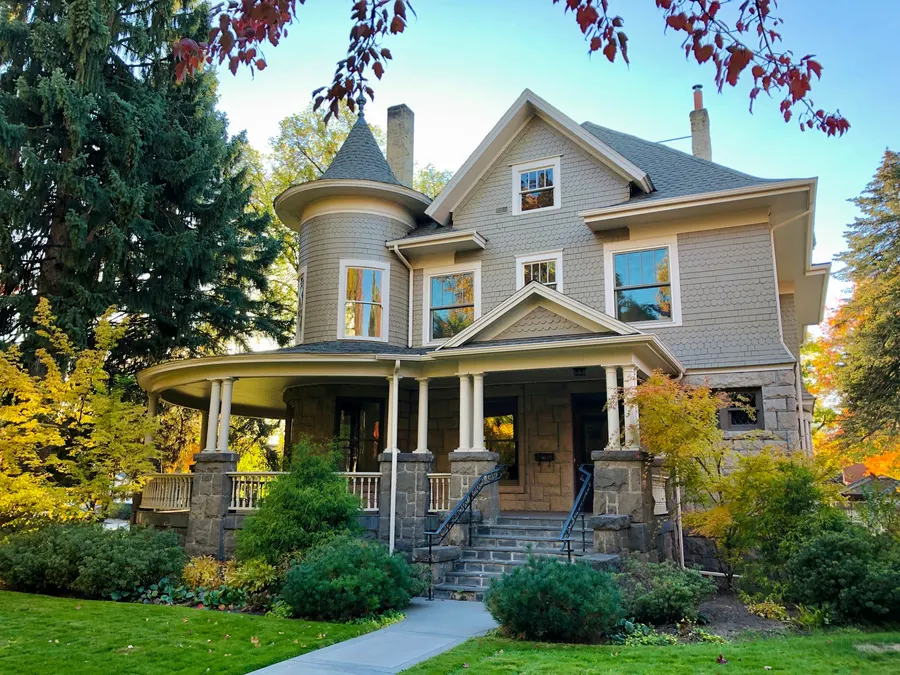
Start with what the house already has
Everything that follows depends on what is in the house now, and most of that you can find out with a flashlight and a phone.
Most older homes around Wichita fall into one of these:
- Registers in the floors or walls and a furnace in the basement or a closet. You have forced air, and the question is whether the ducts can carry cooling as well as heat. Some of them may be older than the furnace.
- Radiators and a boiler. You have no ducts to reuse, and the heat may be fine exactly as it is. Cooling gets its own answer.
- A floor furnace or a wall heater. No ducts again, and usually no whole-house system of any kind.
- A mix of these, which is common once a house has had an addition, a closed-in sleeping porch or a finished attic.
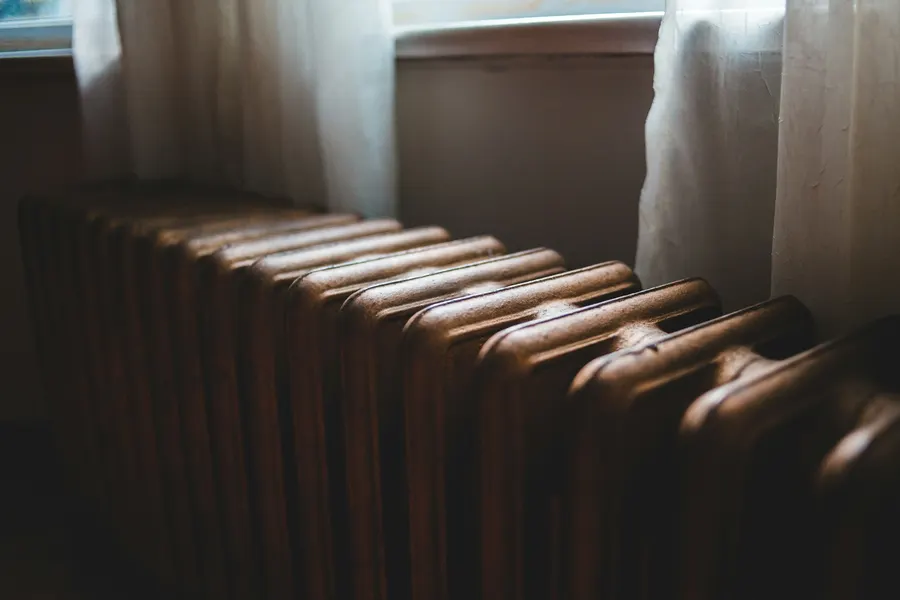
Before anyone visits
Note what you can see, and leave the rest alone:
- Where the registers and return grilles are, room by room. Return grilles are usually the larger ones, and older houses may have very few.
- Which rooms run hot or cold, and at what time of year.
- A phone photo of the data plate on the furnace and on any outdoor unit.
- What the furnace vents into: a chimney or metal flue, or a plastic pipe through the wall. Note whether a water heater shares it.
- Whether you can get into the attic and the basement or crawlspace, and whether closets stack one above the other between floors.
- Any white or gray wrap on ducts, pipes or a boiler. Photograph it and do not touch it.
- A photo of your electrical panel with its door open and its cover left on.
- Whether you have working carbon monoxide alarms, and the replace-by dates on them.
Anything on that list that looks odd goes to the technician as an observation. What it means is theirs to find.
How to add central air to an older home
There are three real routes, and plenty of older houses end up using two of them. Which one fits depends on the house rather than on the equipment.
Use the ductwork you already have
If the house has forced-air heat, an indoor coil on the furnace and an outdoor unit on a pad is usually the least disruptive way to get whole-house cooling, because very little has to be opened up. It only works as well as the ducts and the blower allow, though, and that has to be measured before anyone quotes it.
Add or rework the ductwork
Where the existing ducts cannot carry it, or there are none, new runs can often be found: through the basement, across an attic floor, along knee walls, or up through closets that stack between floors. The price of that is usually closet space on two floors and some plaster to patch. In a two-story house, a small separate system for the upstairs is sometimes a better answer than trying to push everything up from the basement.
Go ductless
A ductless mini-split carries refrigerant to the room rather than air, so it needs a line set and a hole the size of your wrist instead of a duct chase. It heats as well as cools, and each head can run on its own, which suits a house where the bedrooms and the living room have never agreed. It conditions the room it is in and does nothing for the room around the corner.
If a head on a plaster wall is the objection, there are other shapes. A floor-mounted unit sits low against the wall like a radiator, which often looks right in an older house, and a slim concealed unit can feed two or three small rooms from a closet through short duct runs.
Small-duct systems, if someone proposes one
You will also read about small-duct, high-velocity systems, which push air through flexible tubing narrow enough to fit where a standard duct will not go. They are specialized equipment and the design matters more than usual, so ask anyone proposing one how many they have installed and what the outlets look like in a finished room.
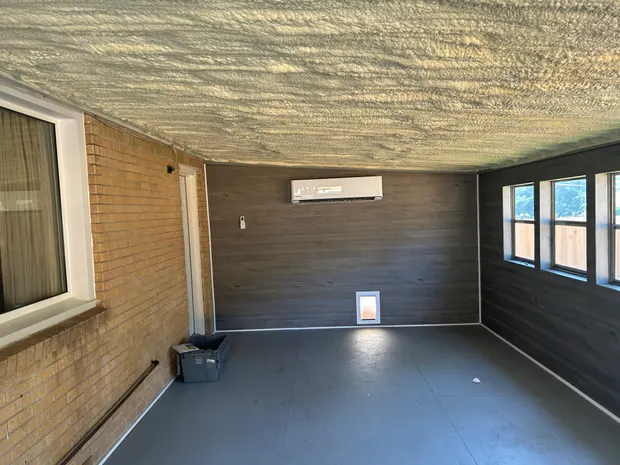
You do not have to do the whole house at once. You can start with the rooms that matter most and keep a window unit or two while you plan the rest, which is a sensible way to spread the work out.
Old ductwork: keep it, change it or leave it alone
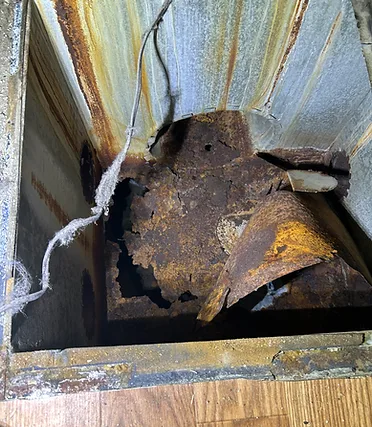
Age alone does not settle it. Some old sheet-metal ductwork is sound and worth keeping, and some is corroded, disconnected or far too small for what is now attached to it. You cannot tell which from the room above, and neither can anyone quoting over the phone.
It matters because the ducts set the limit on everything upstream of them. A correctly sized new unit on undersized returns performs like a smaller one, so replacing the equipment without looking at the distribution can leave you with a new system and the same complaint.
What a technician can measure and look at:
- Static pressure across the system, which shows how hard the blower is working to move air through the ducts.
- Airflow at the registers, room by room, to see where the air is actually going.
- The size and number of returns, against what the equipment needs.
- Temperatures at the supply and the return, in whichever mode the weather allows.
- The condition of the ducts and joints that can be reached, including anything running through a crawlspace or attic.
Old wrap on ducts and pipes
Some insulation on ducts, pipes and boilers from this era contains asbestos, and you cannot tell by looking at it. The EPA’s advice is that material in good condition is usually best left alone, and that any removal belongs to a trained and accredited asbestos professional. If wrap is in the way of planned work, have it tested before anyone disturbs it.
Keeping an older furnace, or replacing it
An old furnace is not automatically a bad one. Some of our favorite work is keeping older systems running for people who are not ready to replace them, and a system that has been looked after can have years left in it. What decides it is what a technician finds, starting with safety, rather than the year on the data plate.
Adding air conditioning does not always mean replacing the furnace either. The coil sits on top of it and the furnace’s blower moves the air across it, so the question is whether that blower can do the job and whether the coil fits in the space. In a low basement or a tight closet, that is worth checking before anything else is decided.
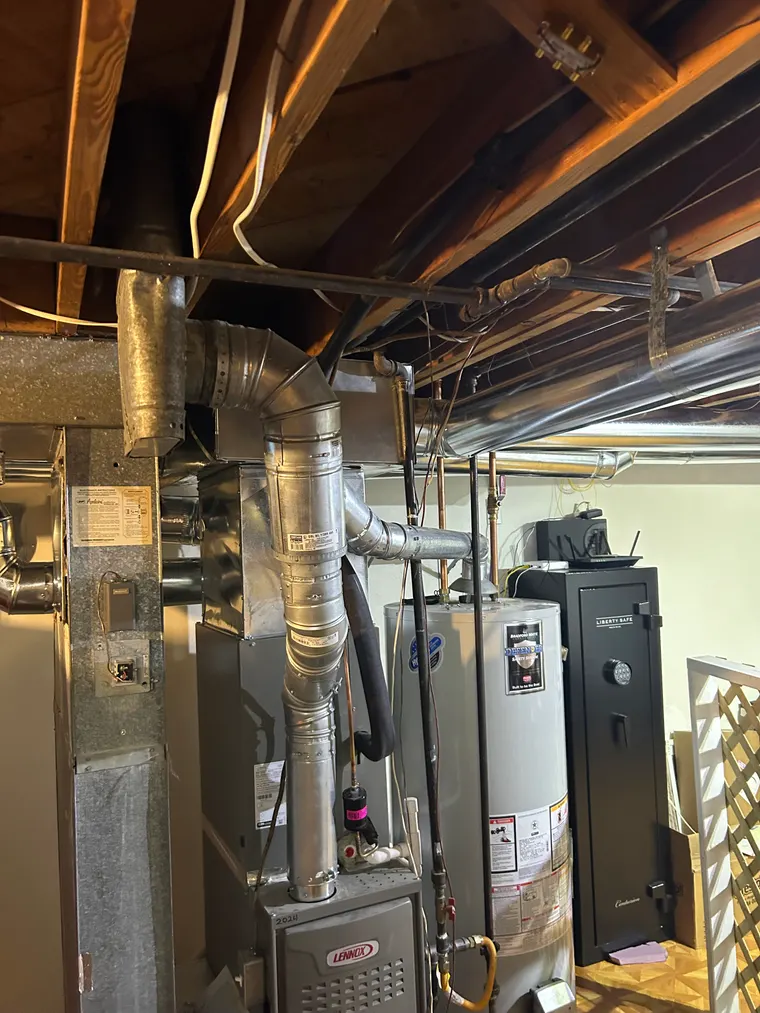
Two things are specific to houses this age. In an older basement, the furnace and the water heater often share a flue that was sized for both. Replace the furnace with a high-efficiency one that vents through its own pipe, and the water heater is left alone in a flue built for more than it now sends up. Sometimes that is fine and sometimes it is not, so it should be checked as part of the job.
The other is sizing. A house that has had insulation, new windows or an addition is not the house the last furnace was chosen for, so a replacement should be sized to the house as it stands rather than to whatever came out of it.
Protecting the plaster, the paint and the woodwork
This is the part that worries owners most, and it should be settled before the work starts rather than discovered during it. Plaster and original trim cannot be swapped out from the back of a truck. A good plan says where every cut goes and who puts the wall back.
Paint is part of that. Homes built before 1978 are more likely to have lead-based paint, and the EPA’s lead-safe rules cover paid work that disturbs painted surfaces in them. The EPA recommends that homeowners hire contractors certified in lead-safe work practices, so raise it with anyone who will be cutting into a painted wall, and ask how they will contain the dust.
Worth agreeing before anyone cuts:
- Where each register, return, head and line set will go. Ask to have it marked on the wall.
- Who patches and finishes the plaster afterward, and whether that is in the price or a separate trade.
- How floors, woodwork and furniture will be protected, and how dust will be kept in the work area.
- Where the outdoor unit will sit and where the line set will run on the outside of the house. On a narrow older lot, that may also mean thinking about a neighbor’s bedroom window.
- Where the condensate goes. An attic air handler needs a safe drain path, because a leak would show up on the plaster ceiling below it.
- Whether the electrical panel can take a new circuit. An older panel may not have room, and that is an electrician’s call worth getting early.
If your house is a landmark or on a historic register
Most older homes are simply old, and none of this applies. If yours is a designated Wichita landmark or sits in one of the city’s landmark districts, work that needs a permit can also need a Certificate of Appropriateness from the city’s Historic Preservation Office first. That makes it worth calling them before deciding where an outdoor unit or a visible line set should go.
If the house is on the state or national register, there may be an upside. Kansas runs a state rehabilitation tax credit, and its published guidance lists HVAC systems and components among the qualifying work. The catch is timing: the application has to be approved by the State Historic Preservation Office before physical work begins, and work that misses its standards can cost you the credit. That conversation comes before any contract is signed, not after.
That is an HVAC contractor’s summary, not tax or legal advice. Those two offices have the answers for your address.
Buying an older home around Wichita?
If you are under contract, you have a short window and a lot of unknowns. A general home inspection will usually tell you whether the heating and cooling turn on. An equipment inspection tells you what condition they are in, and on an older house it is worth more than on a new one, because there is more history to read: the past retrofits, the venting, and the ductwork it all runs through.
You get an assessment of the heating and cooling equipment, with recommendations. Knowing that before you close gives you something to plan around.
Equipment Inspection for Home BuyersAssessment and recommendations · $250
What to ask before you hire anyone
Older houses reward looking before quoting. We work on all makes and models, new equipment and old, and you get The Straight Shot before any work starts: what is wrong, what can be repaired, what can safely wait, and what each option costs. Whoever you call, these are fair questions.
- Will you measure the airflow and the ducts, or are you going by the size of the old unit?
- Can you mark on the wall where every duct, head and line set will go?
- Who repairs the plaster and paint afterward?
- How do you handle painted surfaces and old duct wrap in a house this age?
- If the furnace changes, what happens to whatever else is on the flue?
- Can this be done in stages, and what would the first stage leave ready for the next?
- Do you register the manufacturer warranty on new equipment?
HVAC for older homes rewards patience. Measure first and cut second, and the house you chose stays the house you chose, only more comfortable in July.
Common questions
- Can you add central air to an old house with no ductwork?
- Usually, yes, and the question is how. You can add new duct runs where the house allows them, or go ductless, which needs a line set and a small hole rather than a duct chase and is often the better answer where a trunk line would take closets on two floors. We look at the house before recommending either.
- Is ductless or ducted better for an older home?
- Neither wins everywhere. If the house has sound ducts, using them is usually the simplest way to cool the whole house. If it has no ducts, or a few rooms that have never been comfortable, ductless avoids most of the cutting but puts a unit in each room it serves. Many older homes end up with some of each.
- Can a new air conditioner use my old ductwork?
- Often, if the ducts measure up. Cooling moves more air than heating does, so ductwork laid out for a furnace alone can hold an added air conditioner back. A technician can measure static pressure and airflow before you commit, and that is worth doing before buying new equipment.
- Do I have to replace my old furnace to add air conditioning?
- Not necessarily. The indoor coil sits on the furnace and relies on its blower, so the question is whether that blower can move enough air and whether the coil fits in the space. If the furnace is sound and the answer is yes, it can stay. If it is due for replacement anyway, it is worth pricing both together.
- Will installing HVAC damage my plaster walls?
- It depends on the route. Ductless needs a small hole for each line set, while new ductwork can mean opening plaster in a few places or giving up closet space. Agree where every cut goes before work starts, ask who patches it afterward, and raise lead paint with anyone cutting into a painted wall in a house built before 1978.
- Could the old wrap on my ducts or pipes be asbestos?
- It could be, and you cannot tell by looking. The EPA says asbestos-containing material in good condition is usually best left alone, and that removal belongs to a trained and accredited professional. Do not cut, scrape or remove it yourself. If it is in the way of planned work, have it tested first.
- Do you work on older homes outside Wichita?
- Yes. Older houses are a regular part of our work across Wichita and South Central Kansas, including Augusta, Winfield, Mulvane and Haysville, on all makes and models. Tell us what the house has now and what you would like it to do, and we will start from there.
Side by side
Existing Ducts, New Ducts or Ductless?
Most older homes around Wichita end up with one of these, or a mix of two.
| Compared on | Existing ductworkA new coil and outdoor unit on the ducts your furnace already uses. | New or reworked ductsNew or rebuilt duct runs, sometimes with a second small system upstairs. | Ductless mini-splitA unit in each space, joined to an outdoor unit by a line set. |
|---|---|---|---|
| Fits best when | Existing ductworkThe house has forced-air heat and the ducts measure up. | New or reworked ductsYou want whole-house air from hidden ducts, and the house has a route for them. | Ductless mini-splitThere are no ducts, or a few rooms have never been comfortable. |
| What gets opened up | Existing ductworkVery little indoors, if the ducts can carry it as they are. | New or reworked ductsClosets, attic floors, basement ceilings and some plaster. | Ductless mini-splitA small hole through the wall for each line set, and little else indoors. |
| What you see in the room | Existing ductworkNothing new beyond the registers you already have. | New or reworked ductsNew registers and grilles, usually in the floor or ceiling. | Ductless mini-splitA head on the wall, or a floor or concealed unit, in each space it serves. |
| Room-by-room control | Existing ductworkOne thermostat for the system. | New or reworked ductsOne thermostat per system, so a second system gives you two areas. | Ductless mini-splitEach head can run on its own. |
| What happens to the heat | Existing ductworkIt stays with the furnace you have, or a new one if that is due. | New or reworked ductsCan carry furnace heat too. A house on radiators can keep them. | Ductless mini-splitIt heats as well as cools, but heating capacity falls as it gets colder, so think partner to what you have. |
| What to check first | Existing ductworkStatic pressure, airflow at the registers, return size and the furnace blower. | New or reworked ductsThe route, the plaster work, and any painted surfaces or old wrap in its path. | Ductless mini-splitWhich rooms actually need it, and the load in each one. |
Plenty of good answers are a mix: central air downstairs, say, and ductless for the upstairs rooms that never caught up.
How we do it
The Straight Shot on Your Older Home
You should not have to choose between a comfortable house and the house you fell for. Whether your home is in College Hill, on the older blocks of Augusta or anywhere else around Wichita and South Central Kansas, you will hear what it has now, what it needs, what can safely wait and what each option costs, before any work starts.
More than twenty years installing and repairing heating and cooling on all makes and models, owner-led and based in Haysville. We’re a Rheem Pro-Partner and a dealer for Goodman, Amana, and Innovair, and every new system we install includes complimentary manufacturer warranty registration.
Measure first. Cut second. Call 316-807-1713.
Where this goes next
What We Do About It
- Mini-SplitDuctless repair and installation for additions, converted rooms and anywhere running new ductwork is not practical.
- Air ConditioningRepair, service and installation on all brands and types of air conditioning, in houses old and new.
- Furnace HeatingFurnace repair, service and replacement on all makes and models, sized to the house rather than to whatever came out of it.
- HVAC in WichitaHeating and cooling across the whole city: east side, west side and the older core between them.
- HVAC in Augusta, KSAn older town with older equipment, where retrofits and original ductwork are everyday work.
- HVAC in Winfield, KSCooling older houses in Cowley County without tearing them apart.
More reading
Other Articles
- Rental Property HVACFor landlords with a few doors: what Kansas law expects on heat, what to check between tenants, keeping a vacant house warm, and repair or replace when you do not pay the bills.
- Heat Pump vs FurnaceFor homeowners whose original furnace and air conditioner are coming due together: how each system handles a Kansas winter, where dual fuel fits, and what should decide it.
- Furnace Repair or ReplaceFor homeowners with an older furnace: what its age does and does not tell you, what a fair diagnosis measures, and the few findings that really do point to replacement.
Google Reviews
5.0 Stars on Google
Our customers talk about the same things: we show up fast, we find what’s actually wrong, and we finish when we said we would.
Get started
Let's Get Your Comfort Back
Tell us what your system is doing and we'll tell you what it needs.
Or just call
316-807-1713- Monday–Friday
- 7:00 a.m.–6:00 p.m.
- Saturday
- By appointment only
- Sunday
- Closed
Arrow Heating and Air Conditioning, LLC · License# BUS2025-11907